Losing a loved one is one of life’s most difficult experiences. For Hindu families, a funeral is not only an opportunity to say goodbye but also an important spiritual journey that honours the deceased and supports the soul’s transition according to Hindu beliefs.
At Moksha Funerals, we understand the importance of preserving cultural and religious traditions while providing families with compassionate guidance and practical support during a time of grief.
This guide explains the meaning of a Hindu funeral, the rituals commonly performed, the cremation process, witness insertion, post-funeral ceremonies and what families can expect when arranging a Hindu funeral in Sydney.
What Is A Hindu Funeral?
A Hindu funeral is a sacred ceremony that honours the life of the deceased while supporting the soul’s journey toward its next stage according to Hindu philosophy.
Hindus believe that the soul (Atman) is eternal and continues beyond physical death. The body is considered temporary, while the soul moves through a cycle of birth, death and rebirth known as Samsara.
Funeral rituals are designed to:
- Honour the deceased
- Support the soul’s journey
- Fulfil religious obligations
- Bring comfort to family members
- Preserve family traditions
- Express love, gratitude and respect
At Moksha Funerals, we help families arrange meaningful Hindu Funeral Services Sydney that honour these important beliefs and traditions.
Understanding Hindu Beliefs About Death
Death is viewed differently in Hinduism than in many Western traditions.
Rather than being considered an ending, death is seen as a transition from one stage of existence to another.
Three important concepts often guide Hindu funeral traditions:
Dharma
Dharma refers to duty, responsibility and living according to righteous principles.
Karma
Karma represents the actions performed throughout life and their spiritual consequences.
Rebirth
The soul continues its journey through multiple lifetimes until it eventually achieves Moksha, spiritual liberation.
These beliefs provide comfort to many Hindu families and influence the rituals performed during a funeral service.
What Happens When Someone Dies?
When a loved one passes away, families must first obtain medical certification of the death before funeral arrangements can proceed.
Once this has occurred, families typically contact a funeral director to assist with:
- Transfer into care
- Funeral arrangements
- Cremation bookings
- Religious requirements
- Documentation
- Priest arrangements
For immediate guidance, our article What To Do When Someone Dies explains the process step-by-step.
Arranging A Hindu Funeral In Sydney
Every family is unique and traditions may vary according to region, language and family customs.
At Moksha Funerals, we regularly assist families from:
- Indian communities
- Sri Lankan communities
- Nepalese communities
- Fijian Indian communities
We coordinate every aspect of the funeral, including:
- Transfer into care
- Mortuary preparation
- Cultural dressing
- Hindu priest arrangements
- Cremation bookings
- Witness insertion
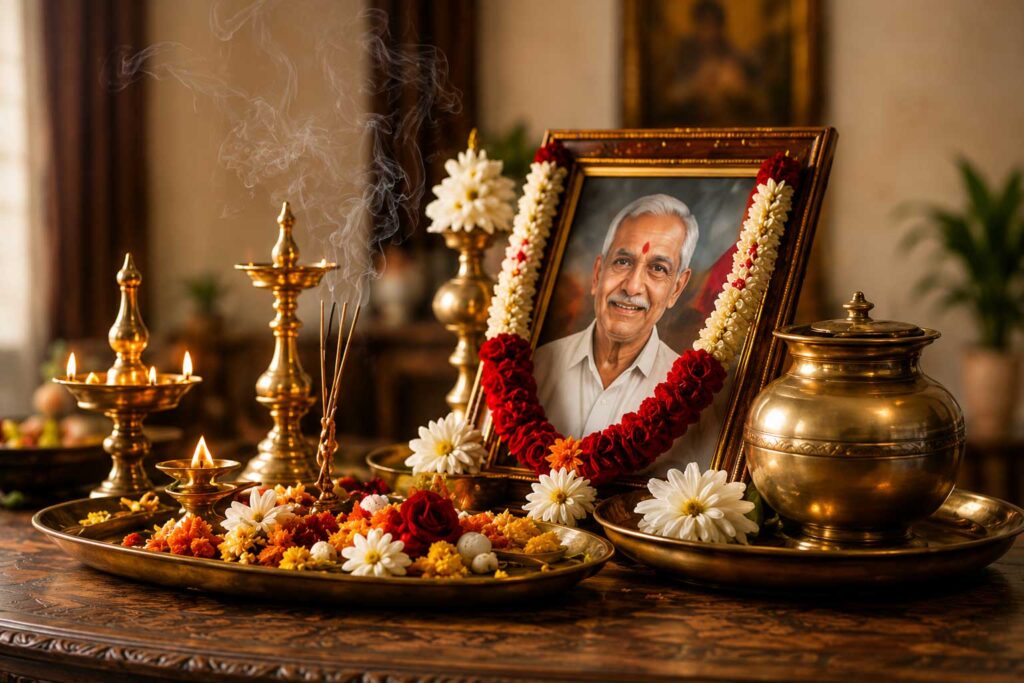
- Photo tributes
- Documentation
- Ashes collection
- Repatriation services
Traditional Hindu Funeral Rituals
Although customs vary, many Hindu funerals include a number of important rituals.
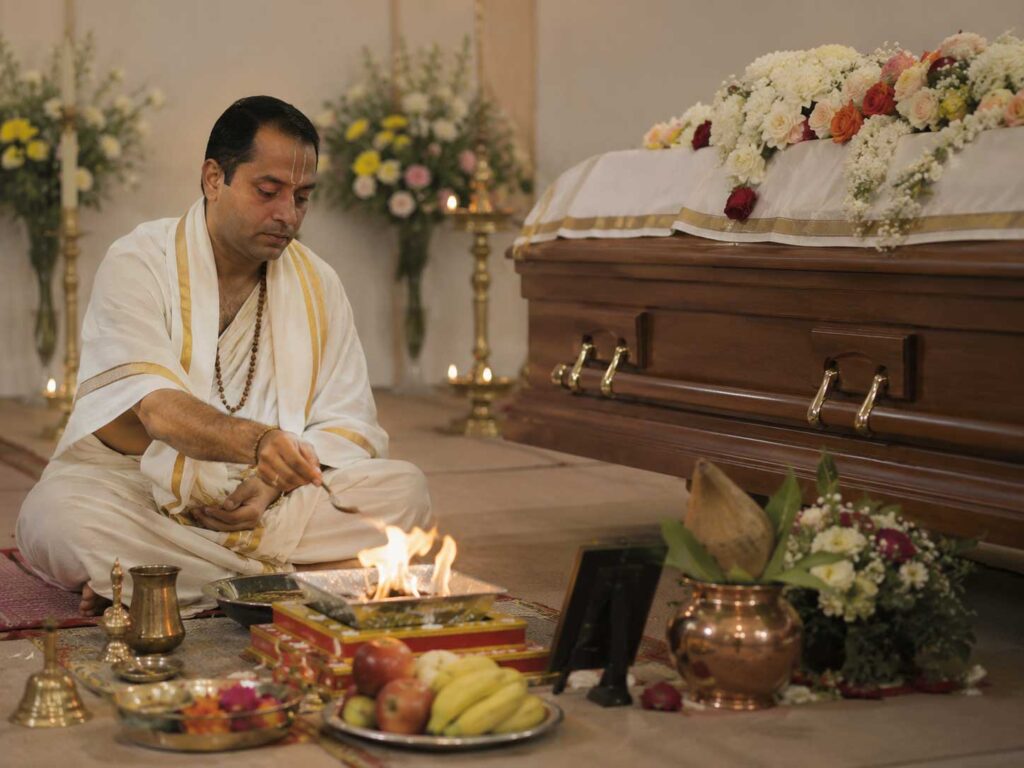
Antim Sanskar
Antim Sanskar means “final rites” and represents the final sacrament in a Hindu person’s life.
These sacred rituals honour the deceased and help guide the soul on its spiritual journey.
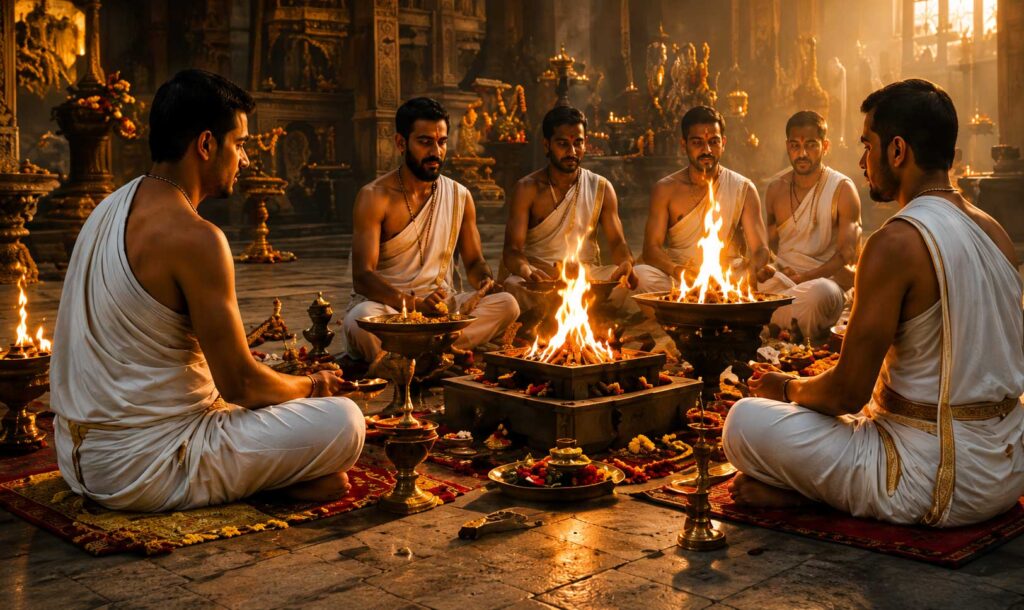
Mantras And Prayers
Priests and family members often recite sacred prayers and mantras throughout the service.
These prayers provide blessings and spiritual guidance for the deceased.
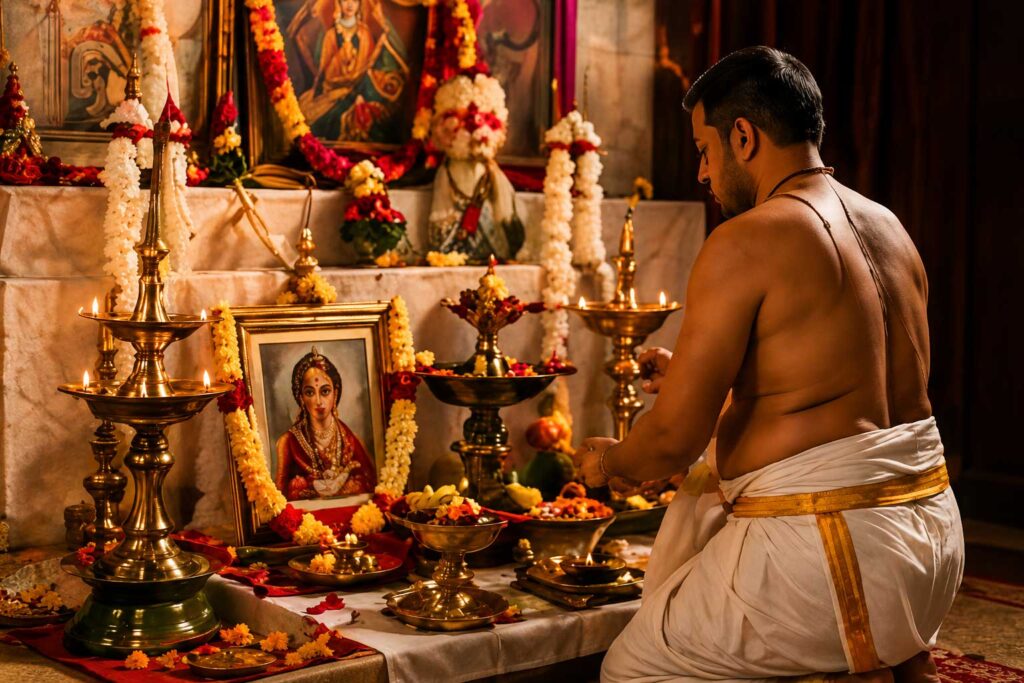
Floral Offerings
Flowers are commonly used as symbols of love, remembrance and respect.
Marigolds, roses and other floral tributes may be offered throughout the ceremony.
Circumambulation
Family members may walk around the coffin or casket as part of the farewell ritual.
This act symbolises respect, devotion and the final farewell.
The Role Of The Eldest Son
Traditionally, the eldest son often plays an important role in Hindu funeral ceremonies.
Responsibilities may include:
- Participating in prayers
- Leading certain rituals
- Assisting the priest
- Participating in witness insertion
- Performing post-cremation ceremonies
Today, many families adapt traditions according to their circumstances and beliefs.
Hindu Cremation Services
Cremation is one of the most important aspects of Hindu funeral traditions.
It symbolises the return of the physical body to the natural elements and supports the soul’s onward spiritual journey.
Most Hindu families choose cremation rather than burial.
Our Hindu Cremation Services Sydney guide explains the cremation process in greater detail.
What Is Witness Insertion?
Witness insertion is an important farewell ritual for many Hindu families.
It allows close family members to witness the coffin entering the cremator.
For many families, witness insertion:
- Provides closure
- Fulfils cultural obligations
- Honours the deceased
- Supports the grieving process
Many families consider this one of the most meaningful moments of the funeral journey.
Learn more in our detailed guide to Witness Insertion.
What Happens After Cremation?
Following cremation, families may choose to collect the ashes and arrange additional ceremonies.
These may include:
- Asthi Visarjan
- Memorial prayers
- Religious ceremonies
- Family gatherings
- Anniversary observances
The timing and nature of these ceremonies vary according to family traditions and regional customs.
Understanding Asthi Visarjan
Asthi Visarjan refers to the immersion of ashes in a sacred body of water.
Many families choose to:
- Return ashes to India
- Scatter ashes in approved locations
- Perform ceremonies locally
- Travel with ashes overseas
Learn more in our Asthi Visarjan Guide.
Returning Ashes Overseas
Many families wish to return ashes to India, Sri Lanka or another country following cremation.
Moksha Funerals can assist with:
- Ashes collection
- Documentation
- Airline requirements
- Consular requirements
- Transportation arrangements
Learn more about our Repatriation Services and international transportation assistance.
What Should You Wear To A Hindu Funeral?
White is traditionally associated with mourning and is commonly worn by close family members.
Guests generally wear:
- White clothing
- Light-coloured clothing
- Conservative attire
- Respectful dress
Bright colours and overly casual clothing are generally avoided unless requested by the family.
For more guidance, read our article What To Wear To A Hindu Funeral.
Frequently Asked Questions
How quickly can a Hindu funeral be arranged?
Most Hindu funerals can be arranged within 24 to 48 hours depending on family requirements and venue availability.
Do I need a Hindu priest?
While not legally required, many families choose to have a Hindu priest conduct prayers and rituals.
What is witness insertion?
Witness insertion allows family members to witness the coffin entering the cremator and is considered an important ritual for many Hindu families.
Can ashes be returned to India?
Yes. Moksha Funerals can assist with documentation and transportation arrangements.
What happens after cremation?
Families may collect ashes, perform Asthi Visarjan, arrange memorial services or transport ashes overseas.
Speak With A Hindu Funeral Director 24/7
If you need immediate assistance arranging a Hindu funeral, the Moksha Funerals team is available 24 hours a day to guide you through every step of the process.
We provide compassionate support, cultural understanding and professional guidance while ensuring your loved one’s traditions are honoured with dignity and respect.
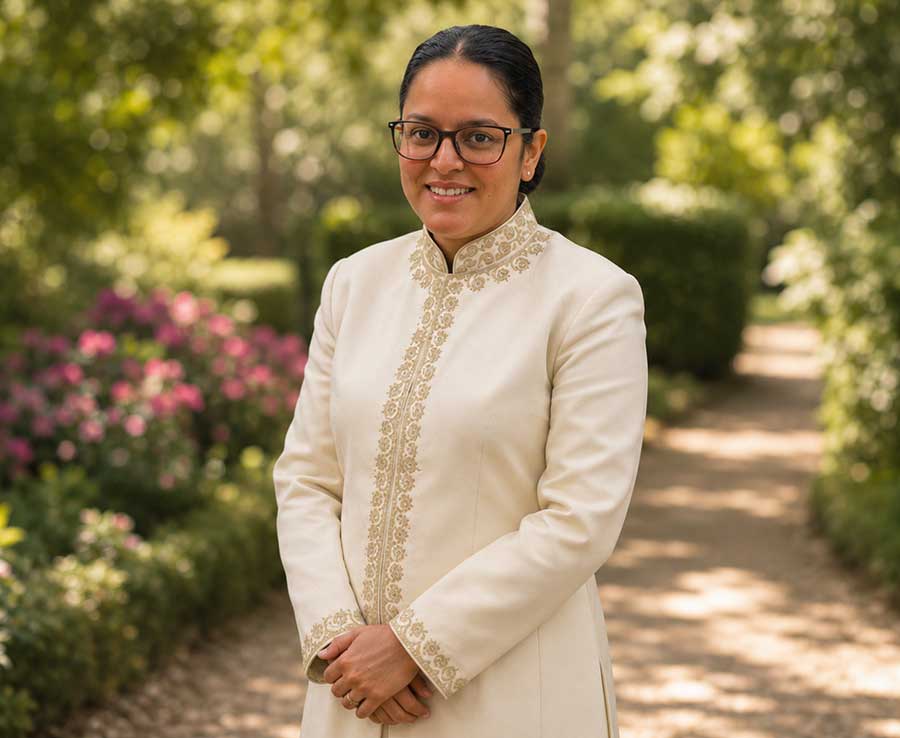
Call Vinodhini and the Moksha Funerals Team Anytime
Available 24 Hours A Day, 7 Days A Week.